

Bitva o radar
- Milos Village

- před 6 dny
- Minut čtení: 3
Aktualizováno: před 5 dny
Topakas, Milos, 13. listopadu 1944 – 16:47
Listopad 1944 přinesl na Milos vítr, který uměl řezat do kůže jako nůž. Nad ostrovem se válela nízká oblačnost a moře pod ní mělo barvu olova. Na jihozápadním cípu ostrova, na místě, kterému místní říkali Topakas, se v pravidelném rytmu ozývalo tiché skřípnutí kovu - německý radar vysoko v kopcích s po zuby ozbrojenou osádkou.

Britský torpédoborec HMS Easton kotvil v tu chvíli tři míle od břehu. Dva čluny s 22 muži z Haddock Troop přistály už ve 14:50 u mysu Psathi. Byla to zvláštní jednotka – 2 seržanti, 4 desátníci a zbytek mariňáků původně cvičených v Alexandrii na pouliční boje v Pireu. Na Milos je poslali zlikvidovat Němce, kteří tu zůstali odříznutí po evakuaci pevninského Řecka.
Pobřeží v těchto místech nebylo přívětivé. Kámen, suť, ostré hrany a příboj, který všechno přehlušoval i prozrazoval zároveň. Muži vystoupili do vody po kolena, zbraně nad hlavou, výbušniny v plátěných vacích. Každý krok po oblázcích zněl příliš hlasitě. Každé cinknutí kovu bylo jako výstřel. Cesta nahoru vedla roklemi. Křoví bylo husté, suché, plné trnů, každý krok šustil.
„Tripwire!“ sykl desátník vpředu. Tenký drátek vedoucí ke světlici a k tomu, čemu říkali Bouncing Betty. Přestřihli ho kleštěmi.
Kolem 17:00, když už světla pomalu ubývalo, stanuli kus pod ostnatým drátem. Kasárna – dlouhá kamenná stavba s plechovou střechou – stála vlevo. Vpravo nahoře, na holém skalním hrotu asi 80 metrů dál, stála mříž Freya radaru. Měl výhled až na Krétu, dosah asi 100 km. To byl jejich cíl.
Pak to přišlo. Z pravého křídla štěkl německý kulomet. Zpočátku nepřesně, „křečovitě a velmi nepřesně“, jak později napsal velitel Dennis. Bell zvedl ruku a jeho breny odpověděly.
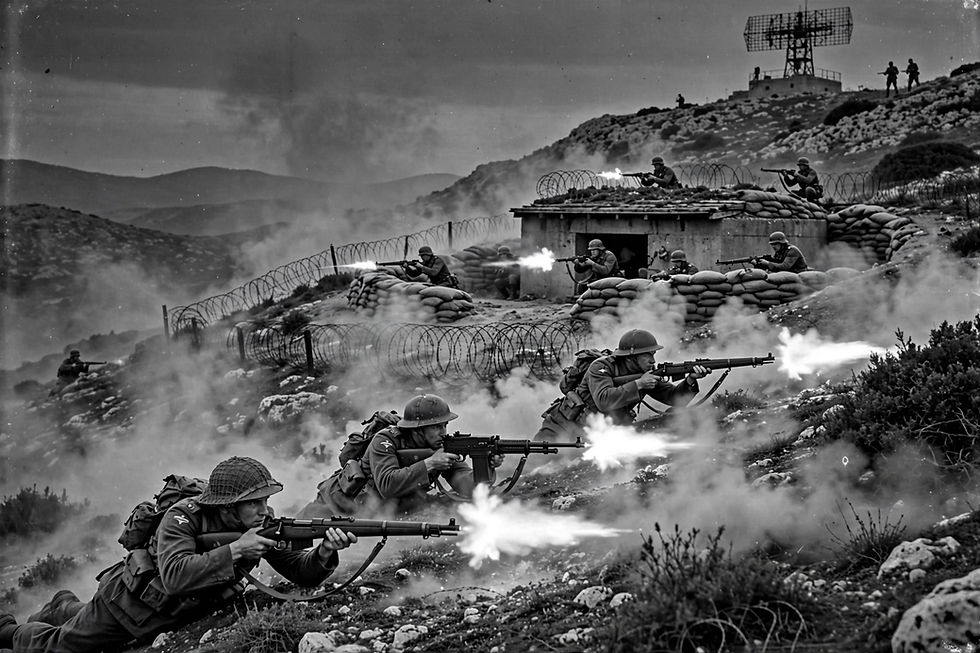
První skupina šla přímo na ostnatý drát, dvě menší kryly boky. Drát byl starý, ale tvrdý. Jakmile ho prostřihli, areál ožil.
Z radiové boudy nikdo nevyšel. Mariňáci vypálili skrz dveře dávku z Brenu – uvnitř to zajiskřilo, ozvaly se malé exploze.
Z prvního zemního bunkru vylezli se zdviženýma rukama dva námořníci Kriegsmarine. Byli mladí, bez čepic. Z druhého bunkru ale nikdo a tak dovnitř letěly dvě fosforové granáty. Kouř zhoustl, bílý a štiplavý. Zevnitř byl slyšet křik. Tři Němci, kteří se pokusili vyběhnout, padli v křížové palbě. Zbytek se stáhl za hřeben a začal házet dolů ruční granáty. Byla to patová situace.
V té chvíli klečel Bell u jednoho ze svých padlých. Byl to Bowkett. Vedle něj ležel Batchelor. Bellův spojař později přísahal, že slyšel jasně rozkaz: „Stáhnout!“ Hlas kapitána Bella. Spojař ho zopakoval.
Začali ustupovat po svahu dolů, kryli se za každým větším kamenem, mlátili si kolena o každou nerovnost a svah pod nimi neustále ujížděl. Tma už byla skoro úplná. Až dole u rokle velitel Dennis přepočítal muže. Chybělo jich pět.
„Bell, Bachelor, Bowkett, Brown, Barber...“
Okamžitě vyslal pátrací hlídku, ale marně. Němci už znovu obsadili hřeben a pálili do tmy.
Dennis věděl, že tu nemohou zůstat. Vrátil se s jednotkou na Easton a naplánoval nový výsadek za svítání. V noci ale Němci radar i podzemní tunel skrz celý vrch sami vyhodili do povětří, aby nepadly do rukou Spojenců, a stáhli se do vnitrozemí.
Až o týden později, 21. listopadu, napsal Dennis do hlášení pro admiralitu, že Bell je „zraněn a v zajetí“. Nebyla to ale pravda. Bell byl zabit na místě, okamžitě. Stejně jako Batchelor, Bowkett a Brown. Pátý muž, námořník Harry Barber, přežil výbuch radaru v hlubokém krytu, byl zajat a později nalezen na německé nemocniční lodi Gradisca.
V roce 1998 přijel na Topakas syn kapitána Bella a na skálu, kde jeho otec padl, připevnil malou mosaznou desku. Je tam dodnes. Když fouká vítr od moře, je slyšet jen šumění jalovců a cinkání drátu, který tam po dlouhá desetiletí zůstal, povalující se v roští jako němý svědek významné události.
Text byl připraven ve spolupráci s AI, obrazové materiály vznikly na základě počítačové fantazie ale s významným přispěním autorových znalostí místních reálií. Chyby v podrobnostech přesto nejsou vyloučeny. Milovníkům válečné historie z řad našich hostů výlet k radarové základně doporučuji!


Komentáře